Wednesday, December 27, 2017

What Physicist Must know about Bitcoins

What Are Bitcoins? How Do Bitcoins Work?

Bitcoin – the initial virtual banking currency of the internet – has existed for several years now and many people have questions about them. Where do they come from? Are they legal? Where can you get them? Why did they split into Bitcoin and Bitcoin Cash? Here are the basics you need to know.

Cryptocurrency Defined

Cryptocurrencies are just lines of computer code that hold monetary value. Those lines of code are created by electricity and high-performance computers.
Cryptocurrency is also known as digital currency. Either way, it is a form of digital public money that is created by painstaking mathematical computations and policed by millions of computer users called 'miners'. Physically, there is nothing to hold. 
'Crypto' comes from the word cryptography, the security process used to protect transactions that send the lines of code out for purchases. Cryptography also controls the creation of new 'coins', the term used to describe specific amounts of code. 
Governments have no control over the creation of cryptocurrencies, which is what initially made them so popular. Most cryptocurrencies begin with a market cap in mind, which means that their production will decrease over time thus, ideally, making any particular coin more valuable in the future.

What Are Bitcoins?

Bitcoin was the first cryptocoin currency ever invented. No one knows exactly who created it – cryptocurrencies are designed for maximum anonymity – but bitcoins first appeared in 2009 from a developer supposedly named Satoshi Nakamoto.
He has since disappeared and left behind a Bitcoin fortune.
Because Bitcoin was the first cryptocurrency to exist, all digital currencies created since then are called Altcoins, or alternative coins. Litecoin, Peercoin, Feathercoin, Ethereum and hundreds of other coins are all Altcoins because they are not Bitcoin.
One of the advantages of Bitcoin is that it can be stored offline on a person's local hardware. That process is called cold storage and it protects the currency from being taken by others. When the currency is stored on the internet somewhere (hot storage), there is high risk of it being stolen. 
On the flip side, if a person loses access to the hardware that contains the bitcoins, the currency is simply gone forever. It's estimated that as much as $30 billion in bitcoins have been lost or misplaced by miners and investors. Nonetheless, Bitcoins remain incredibly popular as the most famous cryptocurrency over time.

Why Bitcoins Are So Controversial

Various reasons have converged to make Bitcoin currency a real media sensation.
From 2011-2013, criminal traders made bitcoins famous by buying them in batches of millions of dollars so they could move money outside of the eyes of law enforcement. Subsequently, the value of bitcoins skyrocketed.
Scams, too, are very real in the cryptocurrency world. Naive and savvy investors alike can lose hundreds or thousands of dollars to scams. 
Ultimately, though, bitcoins and altcoins are highly controversial because they take the power of making money away from central federal banks, and give it to the general public.
Bitcoin accounts cannot be frozen or examined by tax men, and middleman banks are completely unnecessary for bitcoins to move. Law enforcement and bankers see bitcoins as 'gold nuggets in the wild, wild west', beyond the control of traditional police and financial institutions.

How Bitcoins Work

Bitcoins are completely virtual coins designed to be 'self-contained' for their value, with no need for banks to move and store the money. Once you own bitcoins, they behave like physical gold coins: they possess value and trade just as if they were nuggets of gold in your pocket. You can use your bitcoins to purchase goods and services online, or you can tuck them away and hope that their value increases over the years.
Bitcoins are traded from one personal 'wallet' to another. A wallet is a small personal database that you store on your computer drive (i.e cold storage), on your smartphone, on your tablet, or somewhere in the cloud (hot storage).
For all intents, bitcoins are forgery-resistant. It is so computationally-intensive to create a bitcoin, it isn't financially worth it for counterfeiters to manipulate the system. 

Bitcoin Values and Regulations

A single bitcoin varies in value daily; you can check places like Coindesk to see today's value. There are more than two billion dollars worth of bitcoins in existence. Bitcoins will stop being created when the total number reaches 21 billion coins, which will be sometime around the year 2040. As of 2017, more than half of those bitcoins had been created.
Bitcoin currency is completely unregulated and completely decentralized. There is no national bank or national mint, and there is no depositor insurance coverage. The currency itself is self-contained and un-collateraled, meaning that there is no precious metal behind the bitcoins; the value of each bitcoin resides within each bitcoin itself.
Bitcoins are stewarded by 'miners', the massive network of people who contribute their personal computers to the Bitcoin network. Miners act as a swarm of ledger keepers and auditors for Bitcoin transactions. Miners are paid for their accounting work by earning new bitcoins for each week they contribute to the network.

How Bitcoins Are Tracked

A Bitcoin holds a very simple data ledger file called a blockchain.
 Each blockchain is unique to each individual user and his/her personal bitcoin wallet.
All bitcoin transactions are logged and made available in a public ledger, helping ensure their authenticity and preventing fraud. This process helps to prevent transactions from being duplicated and people from copying bitcoins.
Note: While every Bitcoin records the digital address of every wallet it touches, the bitcoin system does NOT record the names of the individuals who own wallets. In practical terms, this means that every bitcoin transaction is digitally confirmed but is completely anonymous at the same time.
So, although people cannot easily see your personal identity, they can see the history of your bitcoin wallet. This is a good thing, as a public history adds transparency and security, helps deter people from using bitcoins for dubious or illegal purposes.

Banking or Other Fees to Use Bitcoins

There are very small fees to use bitcoins. However, there are no ongoing banking fees with bitcoin and other cryptocurrencybecause there are no banks involved. Instead, you will pay small fees to three groups of bitcoin services: the servers (nodes) who support the network of miners, the online exchanges that convert your bitcoins into dollars, and the mining pools you join.  
The owners of some server nodes will charge one-time transaction fees of a few cents every time you send money across their nodes, and online exchanges will similarly charge when you cash your bitcoins in for dollars or euros.
 Additionally, most mining pools will either charge a small one percent support fee or ask for a small donation from the people who join their pools.
In the end, while there are nominal costs to use Bitcoin, the transaction fees and mining pool donations are much cheaper than conventional banking or wire transfer fees. 

Bitcoin Production Facts

Bitcoins can be 'minted' by anyone in the general public who has a strong computer. Bitcoins are made through a very interesting self-limiting system called cryptocurrency mining and the people who mine these coins are called miners. It is self-limiting because only 21 million total bitcoins will ever be allowed to exist, with approximately 11 million of those Bitcoins already mined and in current circulation.
Bitcoin mining involves commanding your home computer to work around the clock to solve 'proof-of-work' problems (computationally-intensive math problems). Each bitcoin math problem has a set of possible 64-digit solutions. Your desktop computer, if it works nonstop, might be able to solve one bitcoin problem in two to three days, likely longer.  
For a single personal computer mining bitcoins, you may earn perhaps 50 cents to 75 cents USD per day, minus your electricity costs.
For a very large-scale miner who runs 36 powerful computers simultaneously, that person can earn up to $500 USD per day, after costs.
Indeed, if you are a small-scale miner with a single consumer-grade computer, you will likely spend more in electricity that you will earn mining bitcoins. Bitcoin mining is only really profitable if you run multiple computers, and join a group of miners to combine your hardware power.  This very prohibitive hardware requirement is one of the biggest security measures that deters people from trying to manipulate the Bitcoin system.

Bitcoin Security 

They are as secure as possessing physical precious metal. Just like holding a bag of gold coins, a person who takes reasonable precautions will be safe from having their personal cache stolen by hackers.  
As mentioned earlier, your bitcoin wallet can be stored online (i.e. a cloud service) or offline (a hard drive or USB stick). The offline method is more hacker-resistant and absolutely recommended for anyone who owns more than 1 or 2 bitcoins but it is not without risk.
More than hacker intrusion, the real loss risk with bitcoins revolves around not backing up your wallet with a failsafe copy. There is an important .dat file that is updated every time you receive or send bitcoins, so this .dat file should be copied and stored as a duplicate backup every day you do bitcoin transactions.
Security note: The collapse of the Mt.Gox bitcoin exchange service was not due to any weakness in the Bitcoin system. Rather, that organization collapsed because of mismanagement and their unwillingness to invest any money in security measures. Mt.Gox, for all intents and purposes, had a large bank with no security guards, and it paid the price.

Abuse of Bitcoins

There are currently three known ways that bitcoin currency can be abused.
1) Technical weakness – time delay in confirmation: bitcoins can be double-spent in some rare instances during the confirmation interval. Because bitcoins travel peer-to-peer, it takes several seconds for a transaction to be confirmed across the P2P swarm of computers. During these few seconds, a dishonest person who employs fast clicking can submit a second payment of the same bitcoins to a different recipient.
While the system will eventually catch the double-spending and negate the dishonest second transaction, if the second recipient transfers goods to the dishonest buyer before they receive confirmation, then that second recipient will lose both the payment and the goods.
2) Human dishonesty – pool organizers taking unfair share slices: Because bitcoin mining is best achieved through pooling (joining a group of thousands of other miners), the organizers of each pool get the privilege of choosing how to divide up any bitcoins that are discovered. Bitcoin mining pool organizers can dishonestly take more bitcoin mining shares for themselves.  
3) Human mismanagement – online exchanges:  With Mt. Gox being the biggest example, the people running unregulated online exchanges that trade cash for bitcoins can be dishonest or incompetent. This is the same as Fannie Mae and Freddie Mac investment banks going under because of human dishonesty and incompetence. The only difference is that conventional banking losses are partially insured for the bank users, while bitcoin exchanges have no insurance coverage for users.

Four Reasons Why Bitcoins Are Such a Big Deal

There is a lot of controversy around bitcoins. These are the top reasons why:  
1) Bitcoins are not created by any central bank, nor regulated by any government. Accordingly, there are no banks logging your money movement, and government tax agencies and police cannot track your money. This is bound to change eventually, as unregulated money is a real threat to government control, taxation, and policing.
Indeed, bitcoins have become a tool for contraband trade and money laundering, precisely because of the lack of government oversight. The value of bitcoins skyrocketed in the past because wealthy criminals were purchasing bitcoins in large volumes. Because there is no regulation, however, you can lose out immensely as a miner or investor.
2) Bitcoins completely bypass banks. Bitcoins are transferred via a peer-to-peer network between individuals, with no middleman bank to take a slice. 
Bitcoin wallets cannot be seized or frozen or audited by banks and law enforcement. Bitcoin wallets cannot have spending and withdrawal limits imposed on them. For all intents: nobody but the owner of the bitcoin wallet decides how their wealth will be managed.
This is really threatening to banks, as you might guess.
3) Bitcoins are changing how we store and spend our personal wealth. Since the advent of printed (and eventually virtual) money, the world has handed over the power of currency to a central mint and various banks. These banks print our virtual money, store our virtual money, move our virtual money, and charge us for their middleman services.
If banks need more currency, they simply print more or conjure more digits in their electronic ledgers. This system is easily abused and gamed by banks because paper money is essentially paper checks with a promise to have value, with no actual physical gold behind the scenes to back those promises.
Bitcoins are designed to put the control of personal wealth back into the hands of the individual. Instead of paper or virtual bank balances that promise to have value, Bitcoins are actual packages of complex data that have value in themselves.
4) Bitcoin transactions are irreversible. Conventional payment methods, like a credit card charge, bank draft, personal checks, or wire transfer, do have the benefit of being insured and reversible by the banks involved. In the case of bitcoins, every time bitcoins change hands and change wallets, the result is final. Simultaneously, there is no insurance protection of your bitcoin wallet: If you lose your wallet's hard drive data or even your wallet password, remember: your wallet's contents are gone forever.

Monday, December 25, 2017

Graduate Study in the US: Guide for International Students

Graduate Study in the US: Guide for International Students

11/1/2016
This article is adapted from the QS Top Grad School Guide 2016-2017, available to read online here.
The planet’s third-largest country by both area and population, the US is a world leader across pretty much every sphere of human activity – business, technology, science, politics, media, and of course education. The US is home to many of the world’s most prestigious universities (including half of the global top 10), and hosts more international students than any other country – almost a million by the latest count.
Advertisement
Read on for information about studying in the US at graduate level – including how to apply, student visas, fees and funding, and staying to seek work.

How to apply for graduate study in the US

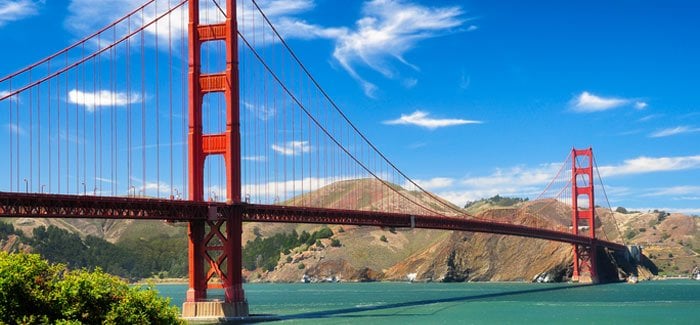
San Francisco
To be eligible for graduate study in the US, you should have completed a bachelor’s degree or equivalent qualification from an internationally recognized institution. Along with your degree certificate, you will also typically need to provide:
  • One or more letters of recommendation;
  • A research proposal (for PhD and postdoctoral applicants);
  • A graduate admissions test result, if required (e.g. GRE/GMAT);
  • Proof of proficiency in English (e.g. TOEFL/IELTS) if you are not a native speaker;
  • A statement of purpose, outlining your aspirations and demonstrating your suitability for the course.
While some institutions accept applications on an ongoing basis, most colleges offer an early deadline (usually December to January) and a regular deadline (usually March to April). You can apply to as many US universities as you like, but many students select a shortlist of six. US universities often charge an application fee, usually between $50 and $100, though online applications can be cheaper or free.
Thinking of studying a PhD in the US? Read our guide on how to find and fund a PhD.

How to apply for a US student visa

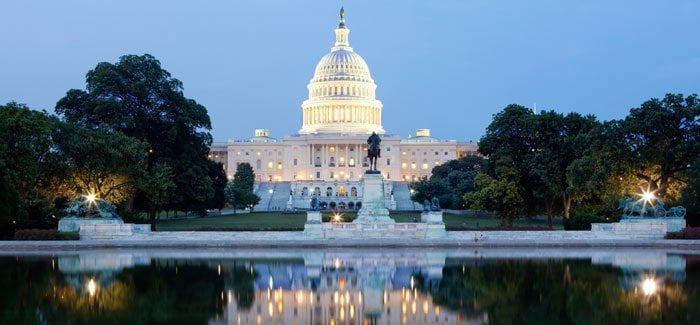
Washington DC
International students will need to obtain an F-1 non-immigrant visa. You can only apply for this after securing a place at an SEVP-approved university, and you’ll need to provide proof of sufficient funds for the course duration and a confirmation of your intention to leave the US after completing your studies. You’ll be asked to attend an interview at your local US embassy, bringing your application and supporting documents with you.
If you’re a Canadian or Bermudian citizen you won’t need a visa to study in the US, but you will still need to obtain an I-20 Certificate of Eligibility form and pay for SEVIS (the student database and tracking system) registration. The non-immigrant visa application fee is currently $160 and the registration fee for SEVIS is $200.

Tuition fees

Tuition fees at US universities are well known for being on the high side. Private universities tend to charge higher fees, and usually have a single rate for both local and international students. Public universities will have a lower rate for students from within their state, and a higher rate for international students and out-of-state residents. If you wish to undertake a professional degree such as an MBA, JD, LLM or MD, you should also expect to pay considerably more than for other postgraduate programs.
All US universities are legally required to include a fees and financial aid calculator on their websites. Use this to get a quick estimate of how much your intended course of study would cost, and what funding you may be eligible for.

Funding

New York City
The good news is that many students are able to benefit from some form of financial aid, and often the most competitive institutions offer the most generous support. For example, five major US universities are entirely “need blind”, pledging to offer sufficient financial assistance for all students (both domestic and international) who are selected for admission, regardless of their financial situation. These schools are Harvard, Amherst, Yale, Princeton and MIT.
As US government aid schemes and loans are often not available to international students, you’ll probably find your best sources of funding are those offered by your chosen university and/or other organizations. Scholarships and grants may be awarded based on financial need, academic achievements and/or other talents, and may also take into account factors relating to your background and field of study.
While the largest funding packages are often found at the top end of the private sector, many public universities offer alternative support. An example is the Curricular Practical Training (CPT) scheme, which allows students with F-1 visas to gain paid, off-campus internships. Another funding option is the Fulbright Program, an initiative led by the US Department of State Bureau of Educational and Cultural Affairs.

Living costs

Depending on where you decide to study in the US, the cost of living can vary considerably. Believe it or not, living costs in the US can often be lower than those in other popular study destinations. Suburban and rural areas in the South and Midwest generally have the lowest cost of living, with big urban centers like New York City entailing considerably higher living expenses (New York University gives an average annual estimate of $24,000). To supplement your income, you may like to seek part-time work on campus. However, work off-campus in your first year is restricted by visa regulations.

Post-graduation work in the US

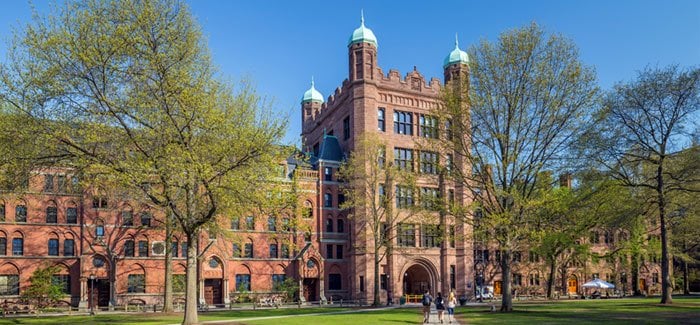
Yale University
After graduation, F-1 visa holders are generally entitled to stay in the country for up to one year of post-graduation practical training. In order to do this you’ll need to apply for a change in visa status within 60 days after graduation, or risk being deported. There are two types of practical training, known as optional (OPT) and curricular (CPT). Both can be completed either during your degree or after graduation, but must not exceed 12 months and must be in a role directly related to your field of study. Some STEM (science, technology, engineering and mathematics) students may also be eligible to extend their practical training period by an additional 24 months.

Meet US grad schools in a city near you

The QS World Grad School Tour is your chance to meet representatives of leading grad schools from across the US, and around the world. Get personal answers to your questions, attend free seminars about grad school admissions, and gather all the information you need. Attendees are also eligible to apply for exclusive scholarships.
This article was originally published in January 2015. It was last updated in November 2016. 
Want more content like this? Register for free site membership to get regular updates and your own personal content feed.

Saturday, December 23, 2017

Who the hell is Elon Musk?

Who the hell is Elon Musk?


5/11/2015
What do you mean, you've never heard of Elon Musk?
While the youthful face of this South African-born Canadian-American (owner of one of the most deceptive accents on the planet) might not be as recognisable as the likes of Steve Jobs or Bill Gates, Musk is the closest thing we've got to a real life Tony Stark (director Jon Favreau even said Musk served as a benchmark for the Iron Man movies).
With Musk's latest technology venture - a solar-powered home battery that threatens to shake up energy supply - gaining $800 million (£516m) of orders in its first week, we've assembled a fact file explaining why the roving, restless mind of this man could shape the future of our transport, energy and space-going future. But first, some facts.

What's his background?


Musk started his love-affair with technology at a very early age. Son of Errol Musk, a South African-born electrical and mechanical engineer, and Maye Musk, a Canadian-English model, Musk sold his first computer program for $500 at the age 12: code for a video game titled Blastar.
But gaming wouldn't prove to be the main outlet for his computer skills: his first major business success came in 1995, when he and his brother Kimbal launched internet city guide service Zip2. A successful sale to Compaq freed up his time to launch the email payment service X.com, leading to a merge with Confinity which was working on a similar solution called PayPal. When PayPal was poached by eBay in 2002, Musk - as the company's largest shareholder - made a cool $165 million. He was only 31 years old.
Latterly, he is turning his attention to potentially world-changing endeavours.

He's making space travel affordable


Space is expensive. Getting to it, staying in it, looking at it, all costs a heap of money. 
The US Government has been steadily reducing NASA's budget since 1965. The Space Shuttle programme, which ran from 1971 to 2011, was said to have cost $450 million per launch (though some put that figure closer to $1.3 billion). Resupplying the International Space Station and putting satellites in orbit is a wallet-draining headache that isn't about to go away - or, as Musk sees it, a business opportunity thin on competition.
Funded in part by his PayPal wealth, Musk set up SpaceX in 2002. Its early projects were focused on reducing the cost of rockets: in 2010 it became the first private company to successfully put a spacecraft in orbit and bring it back, before its Dragon craft became the first private spacecraft to dock with the International Space Station in 2012. 
Having clocked up contracts with NASA, the US Government, the American Military and a bunch of (hopefully not shady) private companies to help put things in space, SpaceX is now aiming for a manned mission to Mars, reusable rocket ships and even more advanced rockets.

He's revolutionising the electric car 


You'd think trying to get to Mars would be enough to occupy the mind of the average engineer - but, as you're probably starting to realise, Musk doesn't do ordinary.
Shortly after launching SpaceX, he helped establish the electric car company, Tesla motors (now officially a co-founder, his exact role was the subject of a rather messy lawsuit), with the aim of taking on the oil-guzzling motoring industry with an electric car the general public would actually want to own.
After grabbing headlines with the Roadster (a sporty little number that used a body supplied by the UK's Lotus group), Tesla made good on their promise of creating a practical electric car with the launch of the Model S in 2008. Battery powered, with a range of up to 265 miles per charge, the Model S set about overpowering the all-electric competition - scooping up "Car Of The Year" awards in 2013 and 2014. 
Tesla continues to strive to make the electric car industry more competitive. As well as improving charging facilities across the US and international markets (with extra-cool Doc-Ock-esque fuel arm designs), it has taken the bold step of opening up its patents to everyone.
"We believe that Tesla, other companies making electric cars, and the world would all benefit from a common, rapidly-evolving technology platform," wrote Musk in his blog last June.

He's inventing new forms of transportation


news straight to your inbox

Subscribe to our newsletter
Read our privacy policy
"Reaching speeds of 760 miles per hour," isn't the sort of sentence you'd take seriously outside of a science fiction novel. It's akin to, "making the Kessel Run in 12 parsecs". 
But this is the improbable aim of Musk's latest transport brainchild, the Hyperloop.
Describing the tube-riding system as a, "cross between a Concorde and a railgun and an air hockey table", Musk envisages transporting passengers across the 354 miles between Los Angeles to San Francisco Bay Area in 35 minutes.
In essence, Hyperloop would see capsules propelled along a large tube line under partial vacuum, thus reducing the friction and resistance on the capsule and helping it motor along with an average speed of 598 mph. Currently set for construction and testing in California next year, if it works, Hyperloop could help make the world an even smaller place.

And now he's trying to disrupt the energy market


By which we mean he isn't repeatedly flicking the lights on and off.
On 30 April this year, Tesla revealed its latest battery venture, the PowerWall: a rechargeable battery, paired with rooftop solar panels, that can power your domestic needs and thus cut your reliance upon the variable costs of being plugged into the wider grid.  
With a clever combination of charging during low usage periods (like when you're out at work) and kicking in to help power your evening Netflix marathon, the PowerWall is set to arrive in two models (a $3,500 10kWh model and a $3,000 7kwWh model) this summer - with some $800 million-worth units already reserved in its first week. 

He's scared of AI


Worth reading Superintelligence by Bostrom. We need to be super careful with AI. Potentially more dangerous than nukes.
Should you be conjuring an image of a Tony Stark-esque megalomaniac driving around California on the cusp of accidentally starting his own Age Of Ultron war, breathe easy. 
Having raised concerns over creating an all-powerful AI system in multiple tweets and stage appearances, Musk proved his fears were more than just headline-grabbing PR when he donated $10 million to the Future of Life Institute group. Their aim? To ensure any AI we create is human-friendly. 
You should now have some fact-ammo to help you out when you next overhear someone posing the question "Who is Elon Musk?". Here's hoping he keeps on the route of Tony Stark rather than turning into the James Bond villain his career is readily paralleling.

Friday, December 8, 2017

10 Intelligent Ways to Cheat in Exams.

10 Intelligent Ways to Cheat in Exams.


So, let’s just all be honest.Cheating is not something we are unaware of.We have all done this at least  once in our life time. ( I’m referring to cheating in exams.Cheating of any other kind is a big No-No! ).From small chits to blue tooth watches, the techniques are various. Neil deGrasse Tyson once said “When students cheat on exams it’s because our School System values grades more than students learning something.” Thank you Mr.Tyson for standing up for us.So, today we are going to discuss some highly- intelligent-never-get-caught,ways for cheating.9/24/2015
PS- We would never recommend these ways for major exams.It’s always better to study and pass honestly and gracefully.
10. The classic cheat sheet method
By far one of the oldest cheating method known to student kind.But there are some important things you should know to make this method an intelligent one.
A.Never take a large sized paper, opt for something like the one in the image.
B.Write the required information in a clear, readable font size.( size shouldn’t be too big or too small).
C. Get rid of the paper as soon as the exam is over.
D.Do not look too suspicious.
However, this method has a high chance of getting caught.So, go ahead and cheat at your risk.

9. The Water Bottle trick.
This technique is pretty neat.All you have to do is copy down information on a piece of paper and stick it to the label of the bottle.As easy as that.There isn’t a high risk of getting caught.You might want to follow the font on the label to escape unscathed.
8.This exam’s so tough method.
Well, do this if you’re not that proud.What’s pride got to do here anyway? You decided to cheat.That’s enough pride down the drains.What you got to do here is to slam your head on the desk in the utmost desperate manner, and sneak into your friend’s paper!
7.Write on your leg.
Wear some loose fitting pants.The type of pants you can pull up.So, write down formulas and other important text on your leg.Sit with your legs crossed and pull up and cheat peeps.
6. Pen Scanners
Pen Scanners click a photo of the question paper and this is sent through a mobile phone connected to the pen scanner to your helper outside.The cheater has a small earpiece which is connected to the mobile phone.The friend calls the cheater on his phone which is on auto answer mode and dictates the answers.If you can go this far you might as well study.
5.Graphing Calculators

This method is useful for Science and Math exams.So, as you know graphing calculators can help you store data.
Press Program, select New then press Enter.
Name the new program.
Type in your formulas.
To read your notes go to Edit and select the proper one.
Before the exam, the teacher may come and erase your calculator’s memory.To avoid this press the 2nd key then the memory button (“+” button).Next go to “All”.Once you find your notes press Enter.An asterisk will appear which means it’s safe.After the teacher erases the memory go to the menu and you”ll see your notes safe and secure.(You’re welcome).
4. Mechanical Pencil


You need a non-see through mechanical pencil that uses thick leads.Remove the eraser and roll up your cheat sheet and put inside the barrel.During the exam, when one piece of lead runs out pretend as if you are putting more in and take a look at your cheat sheet.
3.MP3 Pen (smh)
A pen that can play audio files.What more do you need?Combine your MP3 pen with a Spy Head Set and then play your audio files.It also really looks like a pen.
2.Smart Watches
This might be the most simple method.All you have to do is, first take a picture of your notes on the phone and then sync it with the smart watch.All your images shall be available on the smart watch too.You don’t even have to worry about taking your phone inside the class.Connect it with blue tooth and keep it outside in your bag.During the test, on the smart watch open gallery and you”ll see your notes there!
1.The “Always Works” method.
This method is perfect.It always works, and the risk of getting caught is zero! It’s pretty simple.All you’ve got to do is take the text book assigned to you, by your teacher and choose one pen.Open the text book, and take the portion you have to learn for your exam and you ACTUALLY study! See? So easy!
So, that’s it people and all the very best for your exams.

Friday, December 1, 2017

A universe of 10 dimensions

A universe of 10 dimensions


When someone mentions "different dimensions," we tend to think of things like parallel universes – alternate realities that exist parallel to our own, but where things work or happened differently. However, the reality of dimensions and how they play a role in the ordering of our Universe is really quite different from this popular characterization.
To break it down, dimensions are simply the different facets of what we perceive to be reality. We are immediately aware of the three dimensions that surround us on a daily basis – those that define the length, width, and depth of all objects in our universes (the x, y, and z axes, respectively).
Beyond these three visible dimensions, scientists believe that there may be many more. In fact, the theoretical framework of Superstring Theory posits that the universe exists in ten different dimensions. These different aspects are what govern the universe, the fundamental forces of nature, and all the elementary particles contained within.
The first dimension, as already noted, is that which gives it length (aka. the x-axis). A good description of a one-dimensional object is a straight line, which exists only in terms of length and has no other discernible qualities. Add to it a second dimension, the y-axis (or height), and you get an object that becomes a 2-dimensional shape (like a square).
The third dimension involves depth (the z-axis), and gives all objects a sense of area and a cross-section. The perfect example of this is a cube, which exists in three dimensions and has a length, width, depth, and hence volume. Beyond these three lie the seven dimensions which are not immediately apparent to us, but which can be still be perceived as having a direct effect on the universe and reality as we know it.
Scientists believe that the fourth dimension is time, which governs the properties of all known matter at any given point. Along with the three other dimensions, knowing an objects position in time is essential to plotting its position in the universe. The other dimensions are where the deeper possibilities come into play, and explaining their interaction with the others is where things get particularly tricky for physicists.
The timeline of the universe, beginning with the Big Bang. According to String Theory, this is just one of many possible worlds. Credit: NASA
According to Superstring Theory, the fifth and sixth dimensions are where the notion of possible worlds arises. If we could see on through to the fifth dimension, we would see a world slightly different from our own that would give us a means of measuring the similarity and differences between our world and other possible ones.
In the sixth, we would see a plane of possible worlds, where we could compare and position all the possible universes that start with the same initial conditions as this one (i.e. the Big Bang). In theory, if you could master the fifth and sixth dimension, you could travel back in time or go to different futures.
In the seventh dimension, you have access to the possible worlds that start with different initial conditions. Whereas in the fifth and sixth, the initial conditions were the same and subsequent actions were different, here, everything is different from the very beginning of time. The eighth dimension again gives us a plane of such possible universe histories, each of which begins with different initial conditions and branches out infinitely (hence why they are called infinities).
In the ninth dimension, we can compare all the possible universe histories, starting with all the different possible laws of physics and initial conditions. In the tenth and final dimension, we arrive at the point in which everything possible and imaginable is covered. Beyond this, nothing can be imagined by us lowly mortals, which makes it the natural limitation of what we can conceive in terms of dimensions.
The existence of these additional six dimensions which we cannot perceive is necessary for String Theory in order for their to be consistency in nature. The fact that we can perceive only four dimensions of space can be explained by one of two mechanisms: either the extra dimensions are compactified on a very small scale, or else our world may live on a 3-dimensional submanifold corresponding to a brane, on which all known particles besides gravity would be restricted (aka. brane theory).
The existence of extra dimensions is explained using the Calabi-Yau manifold, in which all the intrinsic properties of elementary particles are hidden. 
If the  are compactified, then the extra six dimensions must be in the form of a Calabi–Yau manifold (shown above). While imperceptible as far as our senses are concerned, they would have governed the formation of the universe from the very beginning. Hence why scientists believe that peering back through time, using telescopes to spot light from the early universe (i.e. billions of years ago), they might be able to see how the existence of these additional dimensions could have influenced the evolution of the cosmos.
Much like other candidates for a grand unifying theory – aka the Theory of Everything (TOE) – the belief that the universe is made up of ten dimensions (or more, depending on which model of string theory you use) is an attempt to reconcile the standard model of particle physics with the existence of gravity. In short, it is an attempt to explain how all known forces within our universe interact, and how other possible universes themselves might work.
For additional information, here's an article on Universe Today about parallel universes, and another on a parallel scientists thought they found that doesn't actually exist.
There are also some other great resources online. There is a great video that explains the ten dimensions in detail. You can also look at the PBS web site for the TV show Elegant universe. It has a great page on the ten .