Sunday, January 7, 2018

Nikola Tesla: The extraordinary life of a modern Prometheus
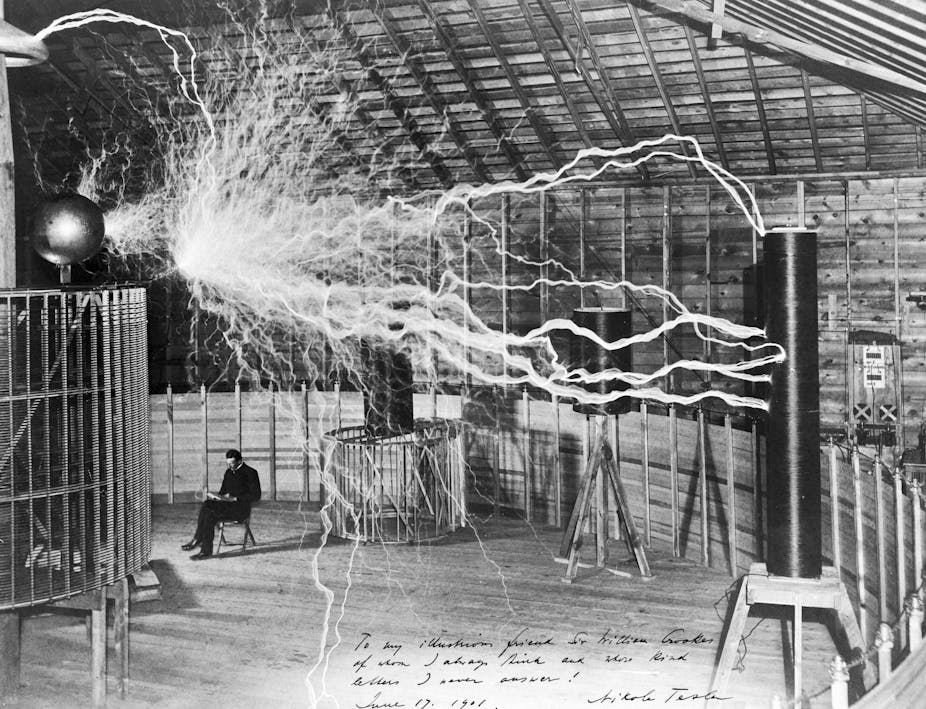
Nikola Tesla: The extraordinary life of a modern Prometheus

Match the following figures – Albert Einstein, Thomas Edison, Guglielmo Marconi, Alfred Nobel and Nikola Tesla – with these biographical facts:
  • Spoke eight languages
  • Produced the first motor that ran on AC current
  • Developed the underlying technology for wireless communication over long distances
  • Held approximately 300 patents
  • Claimed to have developed a “superweapon” that would end all war
The match for each, of course, is Tesla. Surprised? Most people have heard his name, but few know much about his place in modern science and technology.
The 75th anniversary of Tesla’s death on Jan. 7 provides a timely opportunity to review the life of a man who came from nowhere yet became world famous; claimed to be devoted solely to discovery but relished the role of a showman; attracted the attention of many women but never married; and generated ideas that transformed daily life and created multiple fortunes but died nearly penniless.

Early years

Tesla was born in Serbia on a summer night in 1856, during what he claimed was a lightning storm – which led the midwife to say, “He will be a child of the storm,” and his mother to counter prophetically, “No, of the light.” As a student, Tesla displayed such remarkable abilities to calculate mathematical problems that teachers accused him of cheating. During his teen years, he fell seriously ill, recovering once his father abandoned his demand that Nikola become a priest and agreed he could attend engineering school instead.
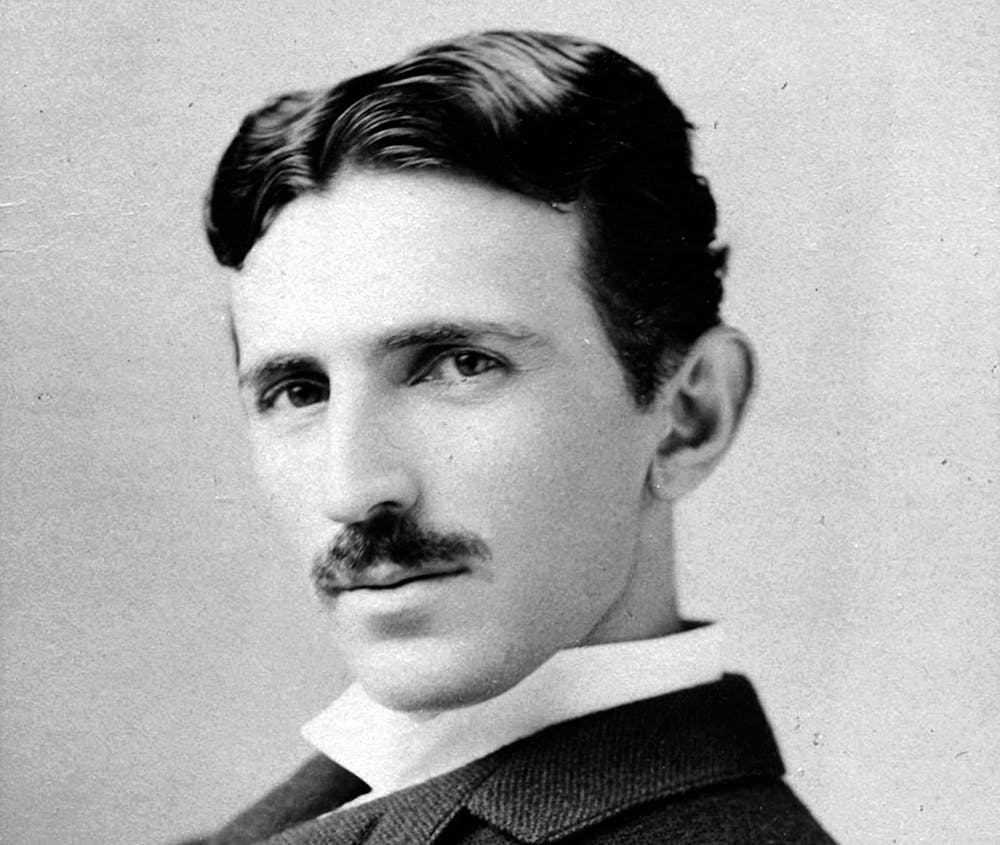
Nikola Tesla, electrical entrepreneur, circa 1893. Napoleon Sarony
Although an outstanding student, Tesla eventually withdrew from polytechnic school and ended up working for the Continental Edison Company, where he focused on electrical lighting and motors. Wishing to meet Edison himself, Tesla immigrated to the U.S. in 1884, and he later claimed he was offered the sum of US$50,000 if he could solve a series of engineering problems Edison’s company faced. Having achieved the feat, Tesla said he was then told that the offer had just been a joke, and he left the company after six months.
Tesla then developed a relationship with two businessmen that led to the founding of Tesla Electric Light and Manufacturing. He filed a number of electrical patents, which he assigned to the company. When his partners decided that they wanted to focus strictly on supplying electricity, they took the company’s intellectual property and founded another firm, leaving Tesla with nothing.
Tesla reported that he then worked as a ditch digger for $2 a day, tortured by the sense that his great talent and education were going to waste.

Success as an inventor

In 1887, Tesla met two investors who agreed to back the formation of the Tesla Electric Company. He set up a laboratory in Manhattan, where he developed the alternating current induction motor, which solved a number of technical problems that had bedeviled other designs. When Tesla demonstrated his device at an engineering meeting, the Westinghouse Company made arrangements to license the technology, providing an upfront payment and royalties on each horsepower generated.
The so-called “War of the Currents” was raging in the late 1880s. Thomas Edison promoted direct current, asserting that it was safer than AC. George Westinghouse backed AC, since it could transmit power over long distances. Because the two were undercutting each other’s prices, Westinghouse lacked capital. He explained the difficulty and asked Tesla to sell his patents to him for a single lump sum, to which Tesla agreed, forgoing what would have been a vast fortune had he held on to them.

AC electric lights lit up the night at the Chicago World’s Fair.
With the World’s Columbian Exposition of 1893 looming in Chicago, Westinghouse asked Tesla to help supply power; they’d have a huge platform for demonstrating the merits of AC. Tesla helped the fair illuminate more light bulbs than could be found in the entire city of Chicago, and wowed audiences with a variety of wonders, including an electric light that required no wires. Later Tesla also helped Westinghouse win a contract to generate electrical power at Niagara Falls, helping to build the first large-scale AC power plant in the world.

Challenges along the way

Tesla encountered many obstacles. In 1895, his Manhattan laboratory was devastated by a fire, which destroyed his notes and prototypes. At Madison Square Garden in 1898, he demonstrated wireless control of a boat, a stunt that many branded a hoax. Soon after he turned his attention to the wireless transmission of electric power. He believed that his system could not only distribute electricity around the globe but also provide for worldwide wireless communication.
Seeking to test his ideas, Tesla built a laboratory in Colorado Springs. There he once drew so much power that he caused a regional power outage. He also detected signals that he claimed emanated from an extraterrestrial source. In 1901 Tesla persuaded J.P. Morgan to invest in the construction of a tower on Long Island that he believed would vindicate his plan to electrify the world. Yet Tesla’s dream did not materialize, and Morgan soon withdrew funding.
In 1909, Marconi received the Nobel Prize for the development of radio. In 1915, Tesla unsuccessfully sued Marconi, claiming infringement on his patents. That same year, it was rumored that Edison and Tesla would share the Nobel Prize, but it didn’t happen. Unsubstantiated speculation suggested their mutual animosity was the cause. However, Tesla did receive numerous honors and awards over his life, including, ironically, the American Institute of Electrical Engineers Edison Medal.

A singular man

Tesla was a remarkable person. He said that he had a photographic memory, which helped him memorize whole books and speak eight languages. He also claimed that many of his best ideas came to him in a flash, and that he saw detailed pictures of many of his inventions in his mind before he ever set about constructing prototypes. As a result, he didn’t initially prepare drawings and plans for many of his devices.
The 6-foot-2-inch Tesla cut a dashing figure and was popular with women, though he never married, claiming that his celibacy played an important role in his creativity. Perhaps because of his nearly fatal illness as a teenager, he feared germs and practiced very strict hygiene, likely a barrier to the development of interpersonal relationships. He also exhibited unusual phobias, such as an aversion to pearls, which led him to refuse to speak to any woman wearing them.
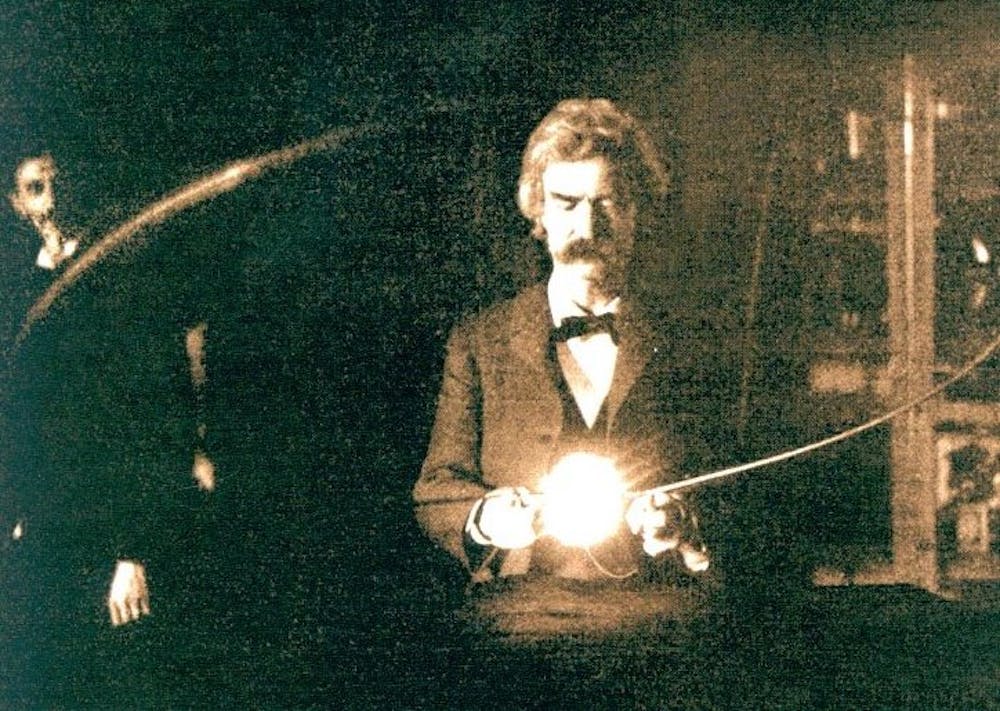
Mark Twain holding Tesla’s experimental vacuum lamp, 1894.
Tesla held that his greatest ideas came to him in solitude. Yet he was no hermit, socializing with many of the most famous people of his day at elegant dinner parties he hosted. Mark Twain frequented his laboratory and promoted some of his inventions. Tesla enjoyed a reputation as not only a great engineer and inventor but also a philosopher, poet and connoisseur. On his 75th birthday he received a congratulatory letter from Einstein and was featured on the cover of Time magazine.

Tesla’s last years
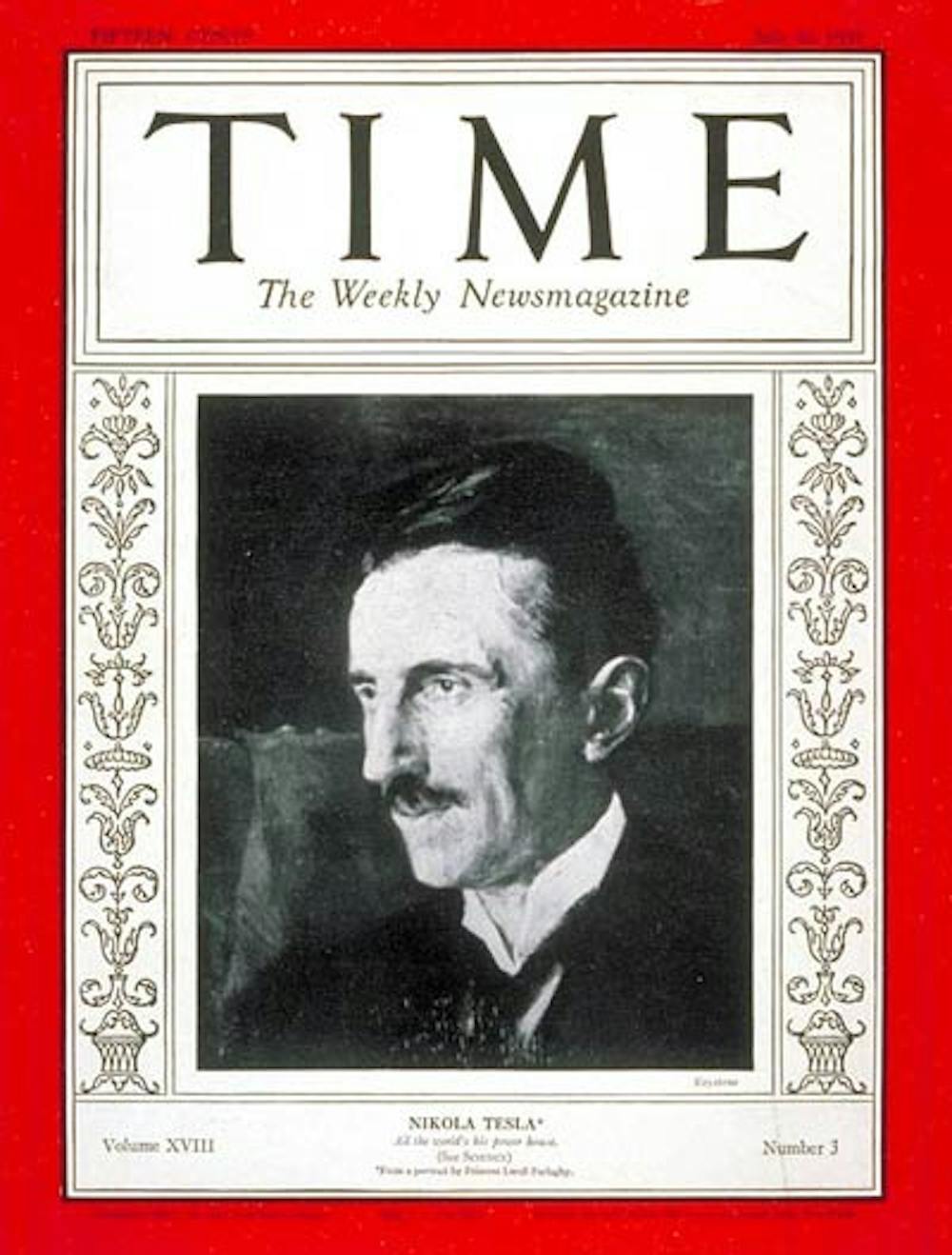
A renaissance man of sorts, on the occasion of his 75th birthday. Time
In the popular imagination, Tesla played the part of a mad scientist. He claimed that he had developed a motor that ran on cosmic rays; that he was working on a new non-Einsteinian physics that would supply a new form of energy; that he had discovered a new technique for photographing thoughts; and that he had developed a new ray, alternately labeled the death ray and the peace ray, with vastly greater military potential than Nobel’s munitions.
His money long gone, Tesla spent his later years moving from place to place, leaving behind unpaid bills. Eventually, he settled in at a New York hotel, where his rent was paid by Westinghouse. Always living alone, he frequented the local park, where he was regularly seen feeding and tending to the pigeons, with which he claimed to share a special affinity. On the morning of Jan. 7, 1943, he was found dead in his room by a hotel maid at age 86.
Today the name Tesla is still very much in circulation. The airport in Belgrade bears his name, as does the world’s best-known electric car, and the magnetic field strength of MRI scanners is measured in Teslas. Tesla was a real-life Prometheus: the mythical Greek titan who raided heaven to bring fire to mankind, yet in punishment was chained to a rock where each day an eagle ate his liver. Tesla scaled great heights to bring lightning down to earth, yet his rare cast of mind and uncommon habits eventually led to his downfall, leaving him nearly penniless and alone.

Wednesday, January 3, 2018

Super 30 program

 Anand Kumar, best known for his Super 30 programme, has been honoured by the British Columbia for his contribution in the field of education. For the last 14 years, Kumar has been tutoring students from underprivileged sections for IIT-JEE entrance examinations. He has been tutoring them free of cost. He has also been invited to talk at IIM Ahmedabad, British Columbia, Tokyo University, Stanford University and IITs. It is also said that he had helped Amitabh Bachchan in preparing for his role in Aarakshan
Super 30 program
 Kumar started, which trains 30 Indian Institute of Technology (IIT) aspirants to crack its entrance test.
Patna-based Kumar is said to have developed an interest in mathematics during his years in a Hindi medium government school. He was accepted into the Cambridge University in 1994, but could not take up the opportunity because of financial restraints. He began selling papads in the evening with his mother to help run the household. He would also give tuition classes to earn extra money. Every weekend, he would travel to Varanasi in order to gain access to foreign journals at the Benaras Hindu University (BHU).
In 1992, he set up the Ramanujan School of Mathematics, where he initially charged a nominal fee in return for coaching students who would appear for competitive exams. He found that even though the fee was quite low, many students could not afford it, and this prompted him to start Super 30 in 2002. The candidates who are part of this programme are meritorious students who belong to low-income families. They are given training, lodging and food prepared by Kumar's mother — all free of cost.
The Super 30 programme gained attention because of its success rate; thus far, 396 of 450 total candidates have been able to crack the IIT entrance test. In 2017 itself, Kumar was able to achieve 100 percent results, as all 30 candidates got admission into the prestigious institutes. This has happened three times in the past.
Reports state that although national and international organisations have offered funding and donations for Super 30's students, but Kumar has declined these offers and continues to fund the programme using the fees he receives from the Ramanujan School of Mathematics. Anand Kumar has been invited to the Massachusetts Institute of Technology (MIT) and Harvard University to talk about his mentoring strategy.
I have tried to gather few unknown facts about the 42 year-old man who has dedicated his life to the field of teaching.
1. He was born in Patna and attended a Hindi-medium school where he developed an interest in Mathematics.
2. He had secured a place at the Cambridge University but because of his financial condition, he could not take admission.
3. To support the family, his mother had started selling papads. Kumar used to assist her in the evening.
4. Just to read foreign journals, he used to travel to Varanasi on Fridays and study in the Central Library, BHU and return to Patna on Monday mornings.
5. He started his own institute, the Ramanujan School of Mathematics in 1992. In three years, the crowd of students grew from two students to 500.
6. It is said that a poor student who wanted to take coaching for IIT-JEE came to him but had no money to pay. It was then the idea for Super 30 came to him.
7. Every year, his institute, the Ramanujan School of Mathematics conducts a test to select top 30 students from economically backward sections. He tutors and provides them accomodation for a year.
8. His mother cooks for the students and his brother takes care of the management.
9. Kumar has been offered financial help from many private and government colleges but he has refused all of them.
10. In 2009, Discovery Channel had featured a programme on Super 30. The New York Times has also written about Anand Kumar.

Monday, January 1, 2018

What Would Happen If We Lost Oxygen For 5 Seconds?

What Would Happen If We Lost Oxygen For 5 Seconds?


Oxygen may not be the most abundant gas in the atmosphere (that’s nitrogen), but it is certainly the most important one. Without it, no living being can survive. Have you ever wondered what would happen if the whole world was cut off from its oxygen supply for a mere 5 seconds?
You might think think that holding your breath for 5 seconds isn’t a very big deal. I mean, come on, it’s just 5 seconds after all!
In reality, however, if the whole world was deprived of it for that long, the results would be catastrophic.

Some debilitating changes would occur if that were to happen:

1) The sky during the day would get dark

Light from the Sun reaches the Earth’s surface as a result of multiple reflections that occur when light particles bounce off the particles in the air (dust, oxygen molecules, other impurities in the air). The absence of oxygen means less particles for the light to bounce on, so the sky would appear dark, almost black, actually. Essentially, light would reach the Earth, but it would seem as if though it were being emitted from a point source, as opposed to what we normally see (the rays of the Sun spread in every direction).
2) Earth’s crust would crumble

The earth beneath us won’t simply crack, but also turn into dust, until we have nothing to stand on. (Image source: pixabay.com)
Oxygen constitutes 45% of the Earth’s crust. Therefore, without its major constituent, the earth below us would disappear and we would free fall. That’s why we require those futuristic flying cars…. PRONTO!
3)  Everyone chilling out at the beach would get extremely sunburnt.

The chemical composition of ozone consists of 3 oxygen molecules(Image source: commons.wikimedia.org)
Ozone is the gas that prevents most of the UV from sunlight from reaching the troposphere. It is entirely comprised of molecular oxygen (ozone=O3), so basically…. it would be like living inside a toaster.
4) Everyone’s inner ear would explode.

Barotrauma occurs when sudden changes in pressure take place.
We would lose about 21% of the air pressure in an instant, which would be similar to jumping from sea level to nearly 2000m almost instantly. This would prevent the eardrums from becoming acclimated to the changes in pressures. We would experience something called barotrauma (refers to injury sustained from failure to equalize the pressure of an air-containing space with that of the surrounding environment). Barotrauma usually occurs when there is a sudden change in pressures. For example, during deep sea diving or air travel, we feel as though our ears have gotten clogged up. In the absence of oxygen, we would experience something like this, but on a much larger scale. Therefore, expect some serious hearing loss.
4) The oceans and other water bodies will start evaporating into space.
Water has two constituents – 2 parts  hydrogen and 1 part oxygen. Without the 33% oxygen, water would just be free hydrogen gas. Hydrogen gas, being the lightest of all the elements, will rise to the upper troposphere and slowly bleed out into space. So, potentially, the Earth could become a huge planet of only deserts in almost no time at all without our precious oxygen.
Advertisement
5) Vehicles with internal combustion engines would stop working.

Planes will just drop down without oxygen. (Image source: commons.wikimedia.org)
All cars running on any type of fuel that relies on internal combustion engines (everything except electric cars) would just stop, since there isn’t any oxygen for the combustion process to occur. We would see planes, helicopters and even space shuttles falling from the sky for the same reason.
6) Pieces of untreated metals in contact would instantly become welded to each other.
The reason metals don’t weld on contact is that they are coated in a layer of oxidation. In vacuum conditions, metal welds without any intermediate liquid phase. This is the principle used in cold welding. In this process, small metallic objects are welded together directly, without melting the interface between the two objects. These metals are placed in a vacuum so that the absence of oxygen aids in fusing the metals together.
7) Every structure made of concrete would crumble.
Oxygen is an important binder in concrete structures, and without it, the compounds do not hold their rigidity.
We already know that oxygen is important for survival, but losing it even for a mere 5 seconds can be dangerous, if not fatal.

Thank you, Oxygen, for existing and letting us exist! 

Summarizing

  • Everyone at the beach would get sunburns. Ozone is molecular oxygen, and blocks the majority of UV light. Without it we are toast.
  • The day-time sky would get darker. With fewer particles in the atmosphere to scatter blue light, the sky would get a bit less blue and a bit more black.
  • Every internal combustion engine would stall. This means that every airplane taking off from a runway would likely crash to the ground, while planes in flight could glide for some time.
  • All pieces of untreated metal would instantly spot weld to each other. This is one of the more interesting side effects. The reason metals don’t weld on contact is they are coated in a layer of oxidation. In vacuum conditions, metal welds without any intermediate liquid phase (Cold welding).
  • Everyone’s inner ear would explode. As mentioned, we would lose about 21% of the air pressure in an instant (~ from sea level to 2000m elevation), so expect some serious hearing loss.
  • Every building made out of concrete would turn to dust. Oxygen is an important binder in concrete structures (really, the CO2 is), and without it the compounds do not hold their rigidity.
  • Every living cell would explode in a haze of hydrogen gas. Water is 88.8% oxygen; without it the hydrogen turns into gaseous state and expands in volume. Molecular weight of Water
  • The oceans would evaporate and bleed into space. As oxygen disappears from the oceans’ water, the hydrogen component becomes an unbound free gas. Hydrogen gas, being the lightest, will rise to the upper troposphere and slowly bleed into space through Atmospheric escape.
  • Everything above ground would immediately go into free fall. As oxygen makes up about ~45% of the Earth’s crust and mantle, there is suddenly a lot less “stuff” beneath your feet to hold everything up.

Wednesday, December 27, 2017

What Physicist Must know about Bitcoins

What Are Bitcoins? How Do Bitcoins Work?

Bitcoin – the initial virtual banking currency of the internet – has existed for several years now and many people have questions about them. Where do they come from? Are they legal? Where can you get them? Why did they split into Bitcoin and Bitcoin Cash? Here are the basics you need to know.

Cryptocurrency Defined

Cryptocurrencies are just lines of computer code that hold monetary value. Those lines of code are created by electricity and high-performance computers.
Cryptocurrency is also known as digital currency. Either way, it is a form of digital public money that is created by painstaking mathematical computations and policed by millions of computer users called 'miners'. Physically, there is nothing to hold. 
'Crypto' comes from the word cryptography, the security process used to protect transactions that send the lines of code out for purchases. Cryptography also controls the creation of new 'coins', the term used to describe specific amounts of code. 
Governments have no control over the creation of cryptocurrencies, which is what initially made them so popular. Most cryptocurrencies begin with a market cap in mind, which means that their production will decrease over time thus, ideally, making any particular coin more valuable in the future.

What Are Bitcoins?

Bitcoin was the first cryptocoin currency ever invented. No one knows exactly who created it – cryptocurrencies are designed for maximum anonymity – but bitcoins first appeared in 2009 from a developer supposedly named Satoshi Nakamoto.
He has since disappeared and left behind a Bitcoin fortune.
Because Bitcoin was the first cryptocurrency to exist, all digital currencies created since then are called Altcoins, or alternative coins. Litecoin, Peercoin, Feathercoin, Ethereum and hundreds of other coins are all Altcoins because they are not Bitcoin.
One of the advantages of Bitcoin is that it can be stored offline on a person's local hardware. That process is called cold storage and it protects the currency from being taken by others. When the currency is stored on the internet somewhere (hot storage), there is high risk of it being stolen. 
On the flip side, if a person loses access to the hardware that contains the bitcoins, the currency is simply gone forever. It's estimated that as much as $30 billion in bitcoins have been lost or misplaced by miners and investors. Nonetheless, Bitcoins remain incredibly popular as the most famous cryptocurrency over time.

Why Bitcoins Are So Controversial

Various reasons have converged to make Bitcoin currency a real media sensation.
From 2011-2013, criminal traders made bitcoins famous by buying them in batches of millions of dollars so they could move money outside of the eyes of law enforcement. Subsequently, the value of bitcoins skyrocketed.
Scams, too, are very real in the cryptocurrency world. Naive and savvy investors alike can lose hundreds or thousands of dollars to scams. 
Ultimately, though, bitcoins and altcoins are highly controversial because they take the power of making money away from central federal banks, and give it to the general public.
Bitcoin accounts cannot be frozen or examined by tax men, and middleman banks are completely unnecessary for bitcoins to move. Law enforcement and bankers see bitcoins as 'gold nuggets in the wild, wild west', beyond the control of traditional police and financial institutions.

How Bitcoins Work

Bitcoins are completely virtual coins designed to be 'self-contained' for their value, with no need for banks to move and store the money. Once you own bitcoins, they behave like physical gold coins: they possess value and trade just as if they were nuggets of gold in your pocket. You can use your bitcoins to purchase goods and services online, or you can tuck them away and hope that their value increases over the years.
Bitcoins are traded from one personal 'wallet' to another. A wallet is a small personal database that you store on your computer drive (i.e cold storage), on your smartphone, on your tablet, or somewhere in the cloud (hot storage).
For all intents, bitcoins are forgery-resistant. It is so computationally-intensive to create a bitcoin, it isn't financially worth it for counterfeiters to manipulate the system. 

Bitcoin Values and Regulations

A single bitcoin varies in value daily; you can check places like Coindesk to see today's value. There are more than two billion dollars worth of bitcoins in existence. Bitcoins will stop being created when the total number reaches 21 billion coins, which will be sometime around the year 2040. As of 2017, more than half of those bitcoins had been created.
Bitcoin currency is completely unregulated and completely decentralized. There is no national bank or national mint, and there is no depositor insurance coverage. The currency itself is self-contained and un-collateraled, meaning that there is no precious metal behind the bitcoins; the value of each bitcoin resides within each bitcoin itself.
Bitcoins are stewarded by 'miners', the massive network of people who contribute their personal computers to the Bitcoin network. Miners act as a swarm of ledger keepers and auditors for Bitcoin transactions. Miners are paid for their accounting work by earning new bitcoins for each week they contribute to the network.

How Bitcoins Are Tracked

A Bitcoin holds a very simple data ledger file called a blockchain.
 Each blockchain is unique to each individual user and his/her personal bitcoin wallet.
All bitcoin transactions are logged and made available in a public ledger, helping ensure their authenticity and preventing fraud. This process helps to prevent transactions from being duplicated and people from copying bitcoins.
Note: While every Bitcoin records the digital address of every wallet it touches, the bitcoin system does NOT record the names of the individuals who own wallets. In practical terms, this means that every bitcoin transaction is digitally confirmed but is completely anonymous at the same time.
So, although people cannot easily see your personal identity, they can see the history of your bitcoin wallet. This is a good thing, as a public history adds transparency and security, helps deter people from using bitcoins for dubious or illegal purposes.

Banking or Other Fees to Use Bitcoins

There are very small fees to use bitcoins. However, there are no ongoing banking fees with bitcoin and other cryptocurrencybecause there are no banks involved. Instead, you will pay small fees to three groups of bitcoin services: the servers (nodes) who support the network of miners, the online exchanges that convert your bitcoins into dollars, and the mining pools you join.  
The owners of some server nodes will charge one-time transaction fees of a few cents every time you send money across their nodes, and online exchanges will similarly charge when you cash your bitcoins in for dollars or euros.
 Additionally, most mining pools will either charge a small one percent support fee or ask for a small donation from the people who join their pools.
In the end, while there are nominal costs to use Bitcoin, the transaction fees and mining pool donations are much cheaper than conventional banking or wire transfer fees. 

Bitcoin Production Facts

Bitcoins can be 'minted' by anyone in the general public who has a strong computer. Bitcoins are made through a very interesting self-limiting system called cryptocurrency mining and the people who mine these coins are called miners. It is self-limiting because only 21 million total bitcoins will ever be allowed to exist, with approximately 11 million of those Bitcoins already mined and in current circulation.
Bitcoin mining involves commanding your home computer to work around the clock to solve 'proof-of-work' problems (computationally-intensive math problems). Each bitcoin math problem has a set of possible 64-digit solutions. Your desktop computer, if it works nonstop, might be able to solve one bitcoin problem in two to three days, likely longer.  
For a single personal computer mining bitcoins, you may earn perhaps 50 cents to 75 cents USD per day, minus your electricity costs.
For a very large-scale miner who runs 36 powerful computers simultaneously, that person can earn up to $500 USD per day, after costs.
Indeed, if you are a small-scale miner with a single consumer-grade computer, you will likely spend more in electricity that you will earn mining bitcoins. Bitcoin mining is only really profitable if you run multiple computers, and join a group of miners to combine your hardware power.  This very prohibitive hardware requirement is one of the biggest security measures that deters people from trying to manipulate the Bitcoin system.

Bitcoin Security 

They are as secure as possessing physical precious metal. Just like holding a bag of gold coins, a person who takes reasonable precautions will be safe from having their personal cache stolen by hackers.  
As mentioned earlier, your bitcoin wallet can be stored online (i.e. a cloud service) or offline (a hard drive or USB stick). The offline method is more hacker-resistant and absolutely recommended for anyone who owns more than 1 or 2 bitcoins but it is not without risk.
More than hacker intrusion, the real loss risk with bitcoins revolves around not backing up your wallet with a failsafe copy. There is an important .dat file that is updated every time you receive or send bitcoins, so this .dat file should be copied and stored as a duplicate backup every day you do bitcoin transactions.
Security note: The collapse of the Mt.Gox bitcoin exchange service was not due to any weakness in the Bitcoin system. Rather, that organization collapsed because of mismanagement and their unwillingness to invest any money in security measures. Mt.Gox, for all intents and purposes, had a large bank with no security guards, and it paid the price.

Abuse of Bitcoins

There are currently three known ways that bitcoin currency can be abused.
1) Technical weakness – time delay in confirmation: bitcoins can be double-spent in some rare instances during the confirmation interval. Because bitcoins travel peer-to-peer, it takes several seconds for a transaction to be confirmed across the P2P swarm of computers. During these few seconds, a dishonest person who employs fast clicking can submit a second payment of the same bitcoins to a different recipient.
While the system will eventually catch the double-spending and negate the dishonest second transaction, if the second recipient transfers goods to the dishonest buyer before they receive confirmation, then that second recipient will lose both the payment and the goods.
2) Human dishonesty – pool organizers taking unfair share slices: Because bitcoin mining is best achieved through pooling (joining a group of thousands of other miners), the organizers of each pool get the privilege of choosing how to divide up any bitcoins that are discovered. Bitcoin mining pool organizers can dishonestly take more bitcoin mining shares for themselves.  
3) Human mismanagement – online exchanges:  With Mt. Gox being the biggest example, the people running unregulated online exchanges that trade cash for bitcoins can be dishonest or incompetent. This is the same as Fannie Mae and Freddie Mac investment banks going under because of human dishonesty and incompetence. The only difference is that conventional banking losses are partially insured for the bank users, while bitcoin exchanges have no insurance coverage for users.

Four Reasons Why Bitcoins Are Such a Big Deal

There is a lot of controversy around bitcoins. These are the top reasons why:  
1) Bitcoins are not created by any central bank, nor regulated by any government. Accordingly, there are no banks logging your money movement, and government tax agencies and police cannot track your money. This is bound to change eventually, as unregulated money is a real threat to government control, taxation, and policing.
Indeed, bitcoins have become a tool for contraband trade and money laundering, precisely because of the lack of government oversight. The value of bitcoins skyrocketed in the past because wealthy criminals were purchasing bitcoins in large volumes. Because there is no regulation, however, you can lose out immensely as a miner or investor.
2) Bitcoins completely bypass banks. Bitcoins are transferred via a peer-to-peer network between individuals, with no middleman bank to take a slice. 
Bitcoin wallets cannot be seized or frozen or audited by banks and law enforcement. Bitcoin wallets cannot have spending and withdrawal limits imposed on them. For all intents: nobody but the owner of the bitcoin wallet decides how their wealth will be managed.
This is really threatening to banks, as you might guess.
3) Bitcoins are changing how we store and spend our personal wealth. Since the advent of printed (and eventually virtual) money, the world has handed over the power of currency to a central mint and various banks. These banks print our virtual money, store our virtual money, move our virtual money, and charge us for their middleman services.
If banks need more currency, they simply print more or conjure more digits in their electronic ledgers. This system is easily abused and gamed by banks because paper money is essentially paper checks with a promise to have value, with no actual physical gold behind the scenes to back those promises.
Bitcoins are designed to put the control of personal wealth back into the hands of the individual. Instead of paper or virtual bank balances that promise to have value, Bitcoins are actual packages of complex data that have value in themselves.
4) Bitcoin transactions are irreversible. Conventional payment methods, like a credit card charge, bank draft, personal checks, or wire transfer, do have the benefit of being insured and reversible by the banks involved. In the case of bitcoins, every time bitcoins change hands and change wallets, the result is final. Simultaneously, there is no insurance protection of your bitcoin wallet: If you lose your wallet's hard drive data or even your wallet password, remember: your wallet's contents are gone forever.

Monday, December 25, 2017

Graduate Study in the US: Guide for International Students

Graduate Study in the US: Guide for International Students

11/1/2016
This article is adapted from the QS Top Grad School Guide 2016-2017, available to read online here.
The planet’s third-largest country by both area and population, the US is a world leader across pretty much every sphere of human activity – business, technology, science, politics, media, and of course education. The US is home to many of the world’s most prestigious universities (including half of the global top 10), and hosts more international students than any other country – almost a million by the latest count.
Advertisement
Read on for information about studying in the US at graduate level – including how to apply, student visas, fees and funding, and staying to seek work.

How to apply for graduate study in the US

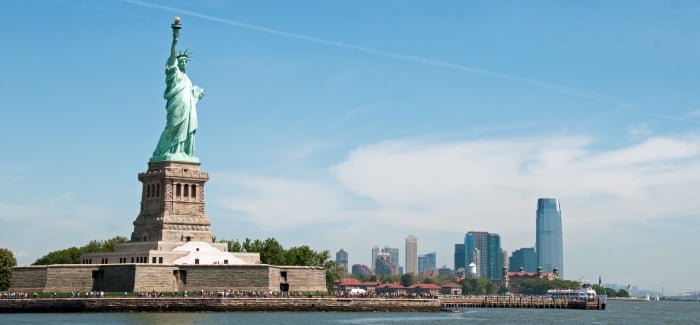
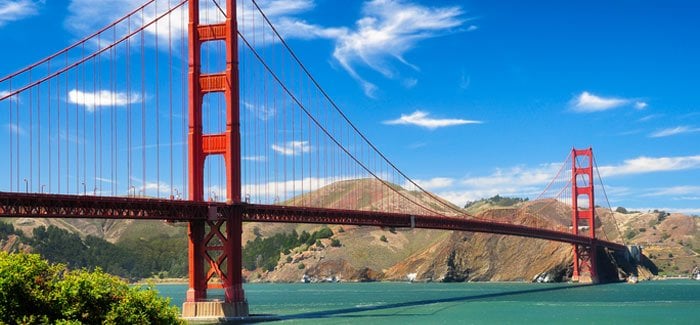
San Francisco
To be eligible for graduate study in the US, you should have completed a bachelor’s degree or equivalent qualification from an internationally recognized institution. Along with your degree certificate, you will also typically need to provide:
  • One or more letters of recommendation;
  • A research proposal (for PhD and postdoctoral applicants);
  • A graduate admissions test result, if required (e.g. GRE/GMAT);
  • Proof of proficiency in English (e.g. TOEFL/IELTS) if you are not a native speaker;
  • A statement of purpose, outlining your aspirations and demonstrating your suitability for the course.
While some institutions accept applications on an ongoing basis, most colleges offer an early deadline (usually December to January) and a regular deadline (usually March to April). You can apply to as many US universities as you like, but many students select a shortlist of six. US universities often charge an application fee, usually between $50 and $100, though online applications can be cheaper or free.
Thinking of studying a PhD in the US? Read our guide on how to find and fund a PhD.

How to apply for a US student visa

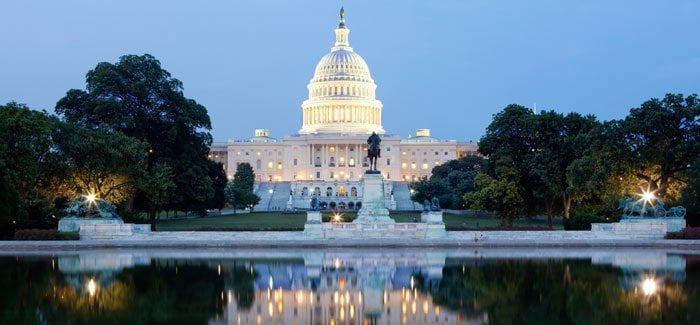
Washington DC
International students will need to obtain an F-1 non-immigrant visa. You can only apply for this after securing a place at an SEVP-approved university, and you’ll need to provide proof of sufficient funds for the course duration and a confirmation of your intention to leave the US after completing your studies. You’ll be asked to attend an interview at your local US embassy, bringing your application and supporting documents with you.
If you’re a Canadian or Bermudian citizen you won’t need a visa to study in the US, but you will still need to obtain an I-20 Certificate of Eligibility form and pay for SEVIS (the student database and tracking system) registration. The non-immigrant visa application fee is currently $160 and the registration fee for SEVIS is $200.

Tuition fees

Tuition fees at US universities are well known for being on the high side. Private universities tend to charge higher fees, and usually have a single rate for both local and international students. Public universities will have a lower rate for students from within their state, and a higher rate for international students and out-of-state residents. If you wish to undertake a professional degree such as an MBA, JD, LLM or MD, you should also expect to pay considerably more than for other postgraduate programs.
All US universities are legally required to include a fees and financial aid calculator on their websites. Use this to get a quick estimate of how much your intended course of study would cost, and what funding you may be eligible for.

Funding

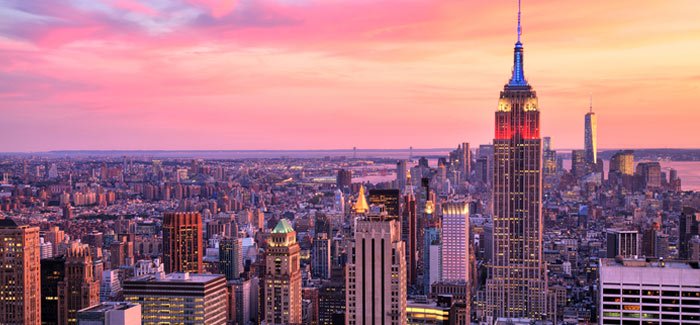
New York City
The good news is that many students are able to benefit from some form of financial aid, and often the most competitive institutions offer the most generous support. For example, five major US universities are entirely “need blind”, pledging to offer sufficient financial assistance for all students (both domestic and international) who are selected for admission, regardless of their financial situation. These schools are Harvard, Amherst, Yale, Princeton and MIT.
As US government aid schemes and loans are often not available to international students, you’ll probably find your best sources of funding are those offered by your chosen university and/or other organizations. Scholarships and grants may be awarded based on financial need, academic achievements and/or other talents, and may also take into account factors relating to your background and field of study.
While the largest funding packages are often found at the top end of the private sector, many public universities offer alternative support. An example is the Curricular Practical Training (CPT) scheme, which allows students with F-1 visas to gain paid, off-campus internships. Another funding option is the Fulbright Program, an initiative led by the US Department of State Bureau of Educational and Cultural Affairs.

Living costs

Depending on where you decide to study in the US, the cost of living can vary considerably. Believe it or not, living costs in the US can often be lower than those in other popular study destinations. Suburban and rural areas in the South and Midwest generally have the lowest cost of living, with big urban centers like New York City entailing considerably higher living expenses (New York University gives an average annual estimate of $24,000). To supplement your income, you may like to seek part-time work on campus. However, work off-campus in your first year is restricted by visa regulations.

Post-graduation work in the US

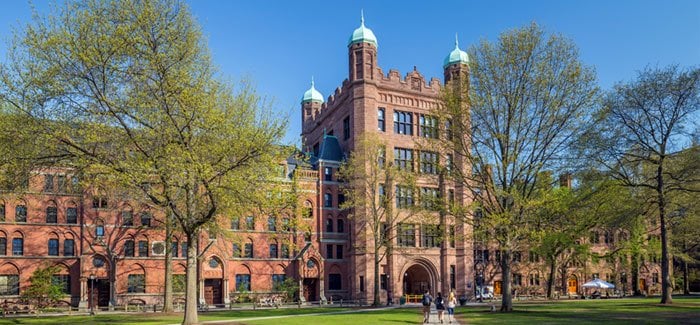
Yale University
After graduation, F-1 visa holders are generally entitled to stay in the country for up to one year of post-graduation practical training. In order to do this you’ll need to apply for a change in visa status within 60 days after graduation, or risk being deported. There are two types of practical training, known as optional (OPT) and curricular (CPT). Both can be completed either during your degree or after graduation, but must not exceed 12 months and must be in a role directly related to your field of study. Some STEM (science, technology, engineering and mathematics) students may also be eligible to extend their practical training period by an additional 24 months.

Meet US grad schools in a city near you

The QS World Grad School Tour is your chance to meet representatives of leading grad schools from across the US, and around the world. Get personal answers to your questions, attend free seminars about grad school admissions, and gather all the information you need. Attendees are also eligible to apply for exclusive scholarships.
This article was originally published in January 2015. It was last updated in November 2016. 
Want more content like this? Register for free site membership to get regular updates and your own personal content feed.